How Much RAM Do I Need? Avoid This Costly Mistake in 2026

Quick Answer
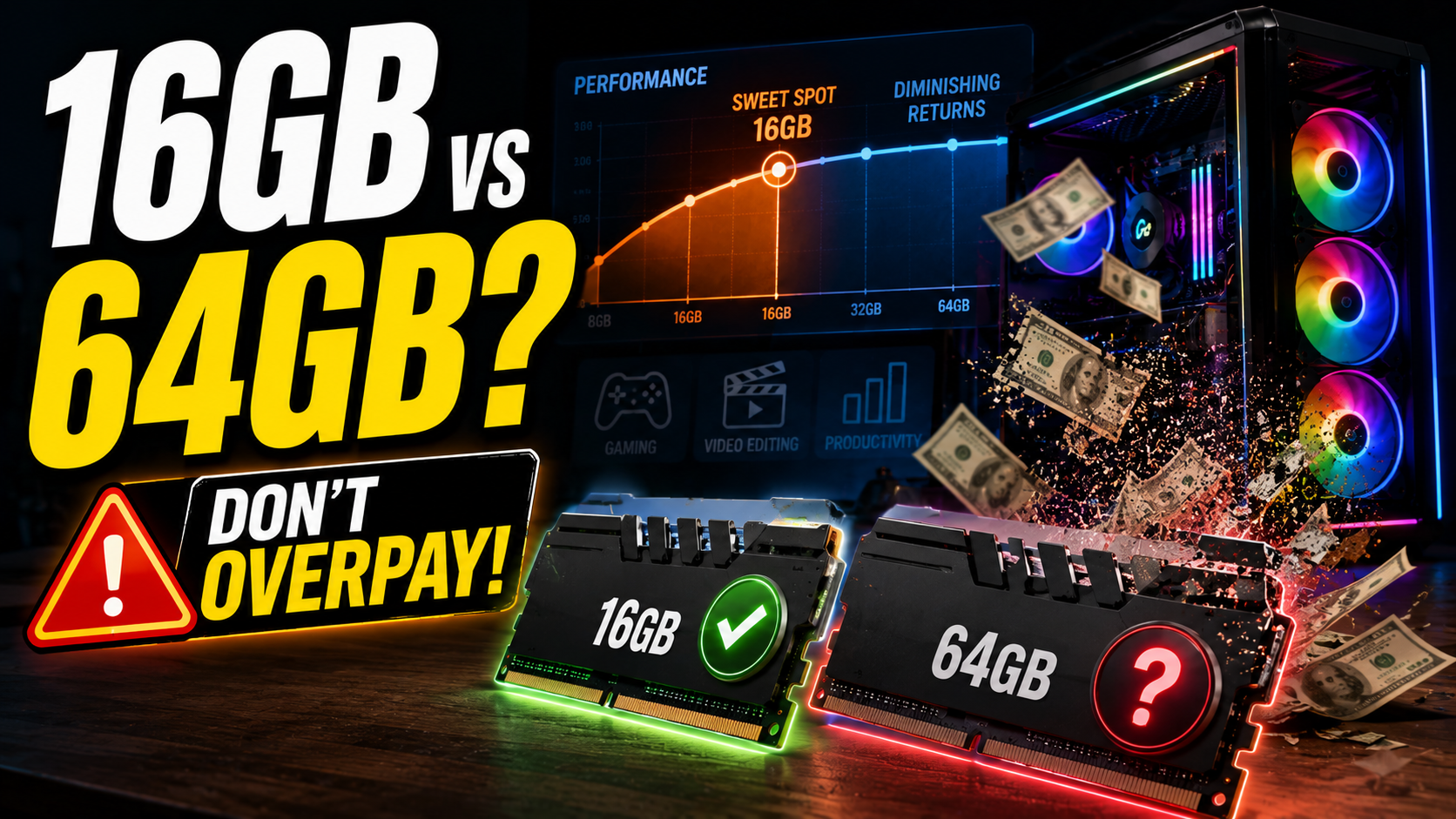
Most people need 16GB RAM in 2026. It provides enough memory for multitasking, web browsing, office work, streaming, and everyday computing. If you’re a gamer, content creator, or power user, 32GB RAM offers more breathing room and better long-term value. Professional workloads such as 4K video editing, AI tools, and virtual machines may benefit from 64GB or more.
Table of Contents
How Much RAM Do I Need?
If you’ve ever purchased a laptop or built a PC, you’ve probably faced the same confusing question: how much RAM do I need?The internet doesn’t make it easier. One guide says 8GB is enough. Another insists that 32GB is the minimum. Meanwhile, hardware enthusiasts are recommending 64GB systems for everyone.
The reality is far simpler. Most people don’t need the maximum amount of RAM available. However, they also shouldn’t buy the absolute minimum. The best choice depends on how you actually use your computer every day.
The biggest mistake buyers make isn’t spending too much on RAM. It’s buying too little and discovering six months later that their shiny new laptop already feels slow. This guide will help you avoid that mistake.
What Does RAM Actually Do?
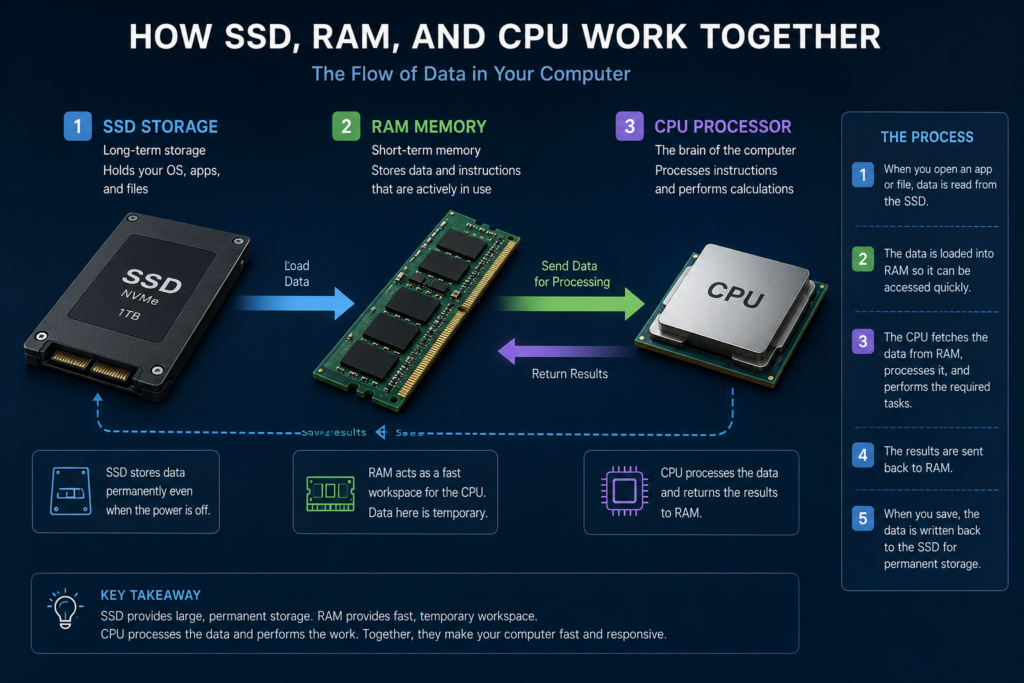
Think of your storage drive as a filing cabinet and your RAM as your desk. Your files, games, and applications live permanently inside the filing cabinet. Whenever you open something, your computer places it on the desk so the processor can access it quickly.
A larger desk allows you to work with more documents simultaneously. Likewise, more RAM allows your computer to handle more applications, browser tabs, and background tasks without slowing down.
When RAM becomes full, Windows starts using your storage drive as temporary memory. Since even modern SSDs are significantly slower than RAM, performance drops noticeably. This is why a computer with insufficient RAM often feels sluggish even when it has a powerful processor.
How Much RAM Do I Need for Everyday Use?
For most users, 16GB RAM is the sweet spot in 2026. A few years ago, 8GB was considered perfectly reasonable. Today, software has changed. Modern browsers consume more memory, Windows 11 uses additional resources, and background applications constantly run behind the scenes.
According to Microsoft’s Windows 11 system requirements, modern operating systems require significantly more resources than older versions, making adequate RAM increasingly important. While Windows may technically run on the minimum requirements, a smooth experience with multiple applications, browser tabs, video calls, and background processes often requires substantially more memory than the baseline specification.
Imagine opening Chrome with twenty tabs, joining a Zoom meeting, listening to Spotify, and editing a Word document. Individually, none of these activities are demanding. Together, however, they can quickly push an 8GB system to its limits. This is exactly why many people complain that their laptop feels slow despite having a decent processor. In reality, RAM is often the bottleneck.
For web browsing, office work, streaming, email, and general productivity, 16GB provides enough headroom to keep everything running smoothly. It also gives you room to grow as software requirements continue increasing over the next few years.
How Much RAM Do I Need Laptop Buyers?
Laptop buyers need to think differently than desktop users. Many modern laptops come with soldered memory, which means the RAM cannot be upgraded later. Whatever amount you purchase today is likely what you’ll be using for the entire life of the device.
This is where many people regret choosing the cheapest configuration. A laptop with 8GB RAM may feel fine when it’s brand new. However, as applications become more demanding and your workload grows, that same machine can start feeling restrictive surprisingly quickly.
For students, remote workers, professionals, and casual users, 16GB should be considered the starting point in 2026. If you’re buying a laptop for programming, engineering, design work, or content creation, 32GB is often a worthwhile investment. The additional memory can significantly improve multitasking and extend the useful lifespan of the machine.
ALSO READ >>> DDR5 RAM Buying Guide for the Finest Performance in 2026
How Much RAM Do I Need for Gaming?
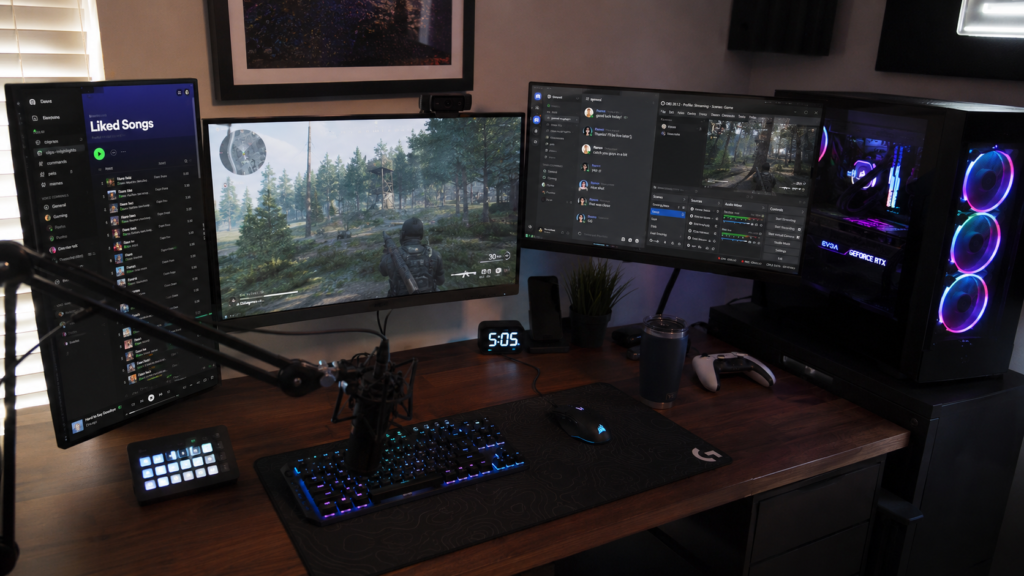
Gaming is where RAM recommendations become controversial. If your primary games are Valorant, Counter-Strike 2, League of Legends, Fortnite, or Rocket League, 16GB RAM is still perfectly acceptable. These titles are designed to run efficiently across a wide range of hardware.
However, modern gaming is no longer just about running a game. Most gamers keep Discord open, stream music, browse guides, use RGB software, record gameplay, or watch streams while playing. Suddenly, memory usage rises dramatically.
This is why 32GB RAM has become the preferred recommendation for gaming enthusiasts in 2026. Interestingly, the biggest advantage isn’t always higher FPS. Instead, gamers often notice smoother multitasking, better frame consistency, and fewer stutters during intense gaming sessions.
If you’re building a gaming PC today and want it to remain comfortable for several years, 32GB is often the smarter choice.
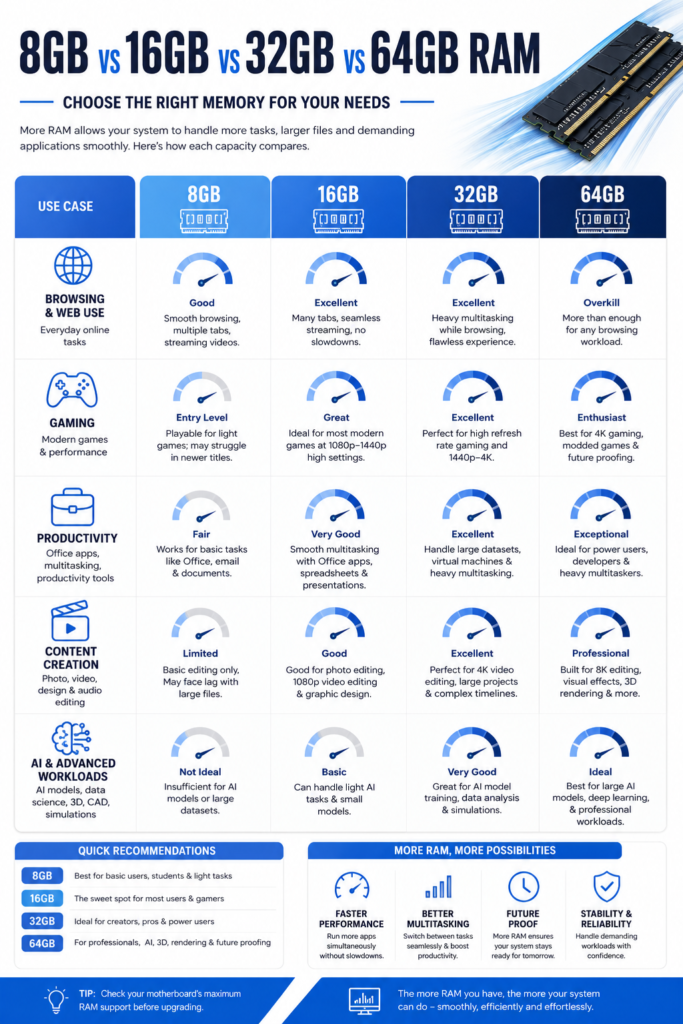
How Much RAM Do I Need? 8GB vs 16GB vs 32GB vs 64GB
| RAM Capacity | Best For | 2026 Verdict |
|---|---|---|
| 8GB | Basic browsing and light use | Minimum |
| 16GB | Most users | Recommended |
| 32GB | Gaming, streaming, productivity | Best Value |
| 64GB+ | Professional workloads | Specialized |
The important thing to understand is that more RAM isn’t always better. A person browsing the web won’t benefit much from 64GB. Meanwhile, a video editor working with large projects may see enormous productivity improvements.
The goal is matching your memory capacity to your workload rather than chasing the biggest number.
What Most Buyers Get Wrong
One of the most common mistakes people make when asking how much RAM do I need is assuming that more RAM automatically means better performance. While having enough memory is important, buying significantly more RAM than your workload requires often provides little real-world benefit.
Many buyers focus entirely on RAM capacity while ignoring other important components such as the processor and SSD. In reality, a balanced system with 16GB RAM, a fast NVMe SSD, and a modern CPU will often feel faster than a poorly configured machine with 64GB RAM.
Another mistake is purchasing a laptop with the minimum memory configuration to save money upfront. This is especially risky because many modern laptops use soldered RAM that cannot be upgraded later. If you’re wondering how much RAM do I need for a laptop, choosing 16GB instead of 8GB can make a noticeable difference in performance and longevity.
The key takeaway is simple: when deciding how much RAM do I need, focus on your actual workload rather than chasing the biggest number on the specification sheet.
In reality, RAM is just one part of the equation. A balanced system with 16GB RAM, a fast SSD, and a modern processor often feels faster than a poorly configured machine with 64GB RAM and other bottlenecks. Another common mistake is buying based on current needs alone. Most people keep their laptops for four to six years. If your workload is growing, buying slightly more RAM today can save frustration later.
However, there’s also a point where spending more becomes wasteful. Many buyers purchase 64GB RAM because it sounds impressive, only to discover that their daily workload never exceeds 12GB.
RAM Myths vs Reality
A surprising amount of RAM advice online is outdated. One common myth is that more RAM automatically makes a computer faster. The truth is that additional memory only helps when your workload actually requires it.
Another myth is that gamers need 64GB RAM. While some specialized setups benefit from it, most gamers will see very little difference between 32GB and 64GB.
Meanwhile, many people still believe 8GB RAM is enough for everyone because it worked well a few years ago. Unfortunately, software requirements have increased significantly, making that recommendation less practical today.
Also Read >>> Extended Warranty: Smart Buy or Total Waste? 10 Things to Know
Future-Proofing Your Purchase
Future-proofing doesn’t mean buying the most expensive configuration available. Instead, it means understanding how your needs are likely to evolve over the next three to five years.
For most users wondering how much RAM do I need, 16GB remains the safest recommendation in 2026. It offers excellent performance for everyday computing, multitasking, productivity, and entertainment while providing enough capacity for future software updates and increasing application demands.
Gamers, streamers, programmers, and content creators should seriously consider 32GB RAM. The additional memory provides greater flexibility, improves multitasking performance, and reduces the likelihood of needing an upgrade as games, creative software, and professional workloads continue to become more demanding.
Professional users working with AI tools, virtual machines, 3D rendering, or high-resolution video projects may find that 64GB quickly pays for itself through improved productivity.
Frequently Asked Questions
Is 16GB RAM enough in 2026?
Yes. For the majority of users, 16GB remains the ideal balance between performance, cost, and longevity.
Is 32GB RAM overkill?
Not for gamers, programmers, streamers, and content creators. For casual users, however, it may be more than necessary.
How much RAM do I need for gaming?
Most gamers should aim for 16GB to 32GB. Enthusiasts building new systems will generally get the best long-term value from 32GB.
How much RAM do I need laptop buyers?
For a new laptop, 16GB is the safest recommendation because many modern models cannot be upgraded later.
Does more RAM increase FPS?
Only when memory is the bottleneck. Once you have enough RAM, additional capacity produces diminishing returns.
Final Thoughts
If you’re still wondering how much RAM you need, remember this simple rule: buy enough RAM for the way you’ll use your computer over the next few years, not just the way you use it today. For most people, 16GB RAM is the clear recommendation in 2026. It provides smooth multitasking, strong everyday performance, and enough headroom for future software demands. Gamers, creators, and power users should consider 32GB for additional flexibility and long-term value. Meanwhile, 64GB remains a specialist option for professional workloads that genuinely require it.
The smartest RAM upgrade isn’t the biggest one—it’s the one that quietly delivers smooth performance every day without becoming a limitation later. If you’ve been asking yourself how much RAM do I need, focus on the way you’ll use your computer over the next few years rather than just today. After all, would you rather save a small amount of money now or enjoy a faster, frustration-free experience for years to come?