How to Fix Samsung PDP Error [PDP] Back-up : Fail Setup-Wizard [FINISH] (4 Easy Steps)

Quick answer:
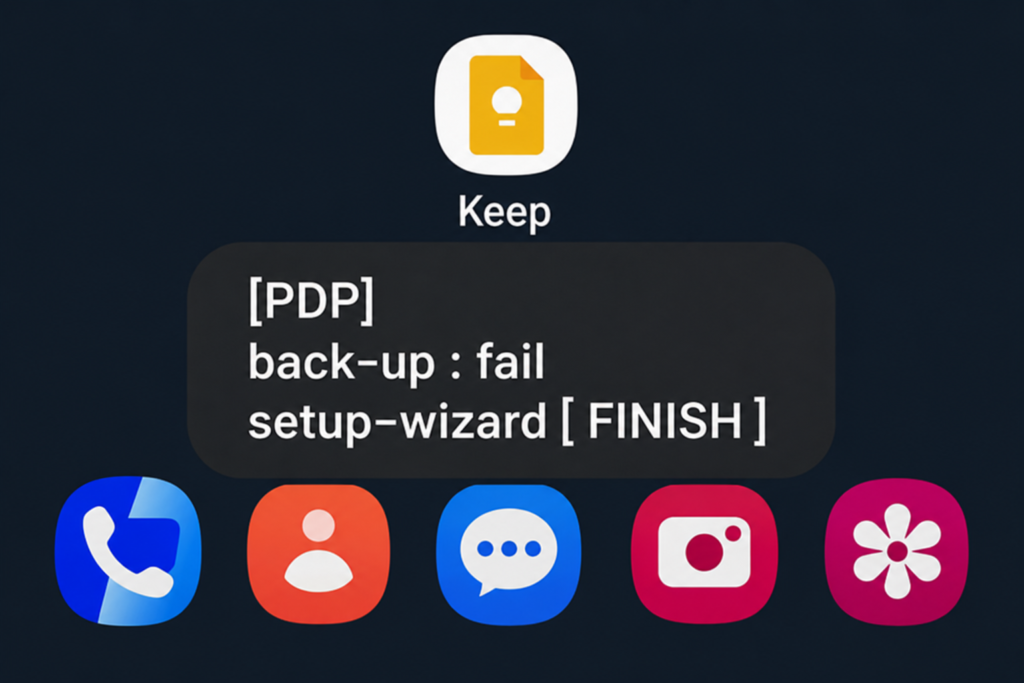
Samsung PDP error messages can appear when a Galaxy phone displays [PDP] back-up: fail / setup-wizard [FINISH] during an attempt to open Recovery Mode. First check the button sequence for your exact model. On many newer Galaxy phones, Recovery Mode is accessed with the phone switched off and connected to a computer using a USB data cable. With the cable connected, hold Volume Up and the Side/Power button until the recovery menu appears. Button combinations differ by model, so follow Samsung’s instructions for your device. For another example of changing mobile technology, explore our overview of D2M mobile technology.
Important: The PDP message by itself is not enough to diagnose a failed update, damaged firmware or hardware fault. Do not select Wipe data/factory reset unless you intend to erase the phone. The steps below explain how to reach the menu safely and what to check if it does not appear.
Table of Contents
What does the [PDP] back-up: fail message mean?
The text [PDP] back-up: fail / setup-wizard [FINISH] is a device-level message that some Galaxy owners report seeing during an unsuccessful attempt to reach a maintenance or recovery screen. The Samsung PDP error message is not a standard Android error that, on its own, identifies one specific cause. A button sequence that does not match the model, a connected-device requirement, or a separate software or hardware problem may be involved.
Samsung’s Recovery Mode instructions vary by model and button layout. Samsung support documentation describes connecting the powered-off phone to a computer with USB before using the model-specific button combination on supported devices. If you are checking a Samsung PDP error, confirm whether your model requires this connection before repeating the key sequence. Trying the same sequence without the cable may not work on some newer Galaxy models, but that does not mean every PDP message has the same cause.
What is Recovery Mode on a Samsung Galaxy phone?
Recovery Mode is a maintenance environment built into many Android devices. Depending on the phone and software version, its menu can include options for rebooting the system, applying an update, clearing a cache partition or erasing user data. The available options are not identical on every Galaxy model.
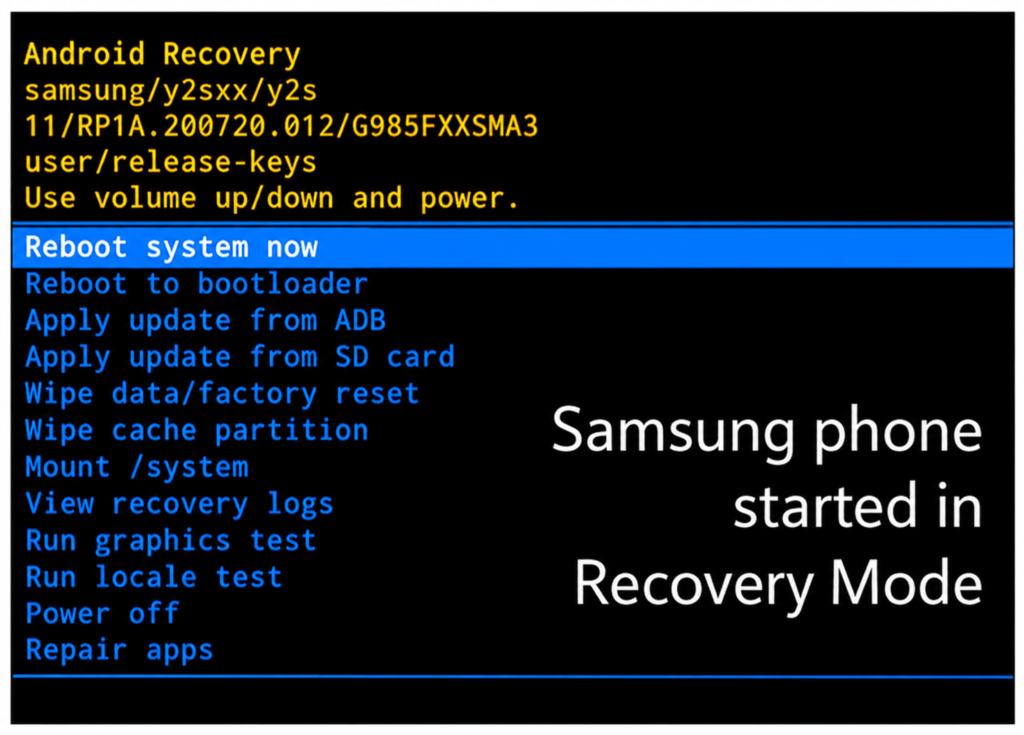
Use this menu carefully. Options such as Wipe data/factory reset permanently remove personal data stored on the device. If your goal is only to restart the phone or enter Recovery Mode, do not choose a wipe or reset option.
Before you try the recovery-button sequence
- Identify your exact Galaxy model (for example, Galaxy S, A, M, Note, Z Fold or Z Flip) and check its support instructions.
- Use a USB cable that supports data, not just charging, and connect it to a computer that is switched on.
- Make sure the phone has sufficient battery charge.
- Remove a case if it is pressing the Side, Power or Volume buttons.
- If the phone contains important data that is not backed up, avoid reset, wipe or firmware-flashing options.
How to enter Samsung Recovery Mode using a USB connection
Use the following general approach only for Galaxy models whose recovery procedure requires a USB connection. If a Samsung PDP error appears while you are trying to open Recovery Mode, check your exact model’s Samsung support instructions first. The buttons and timing depend on the model, so Samsung’s own instructions should take priority if they differ from this overview.
Step 1: Connect the phone to a computer
Connect the Galaxy phone to a powered-on PC or Mac using a suitable USB data cable. If the phone is frozen, use the model’s normal power-off or forced-restart procedure first; do not repeatedly press random button combinations.
Step 2: Switch the phone off
Turn the device off while it remains connected, where the model’s instructions call for this. If the phone cannot be powered off normally, consult Samsung’s instructions for that model rather than assuming one sequence works for every Galaxy generation.
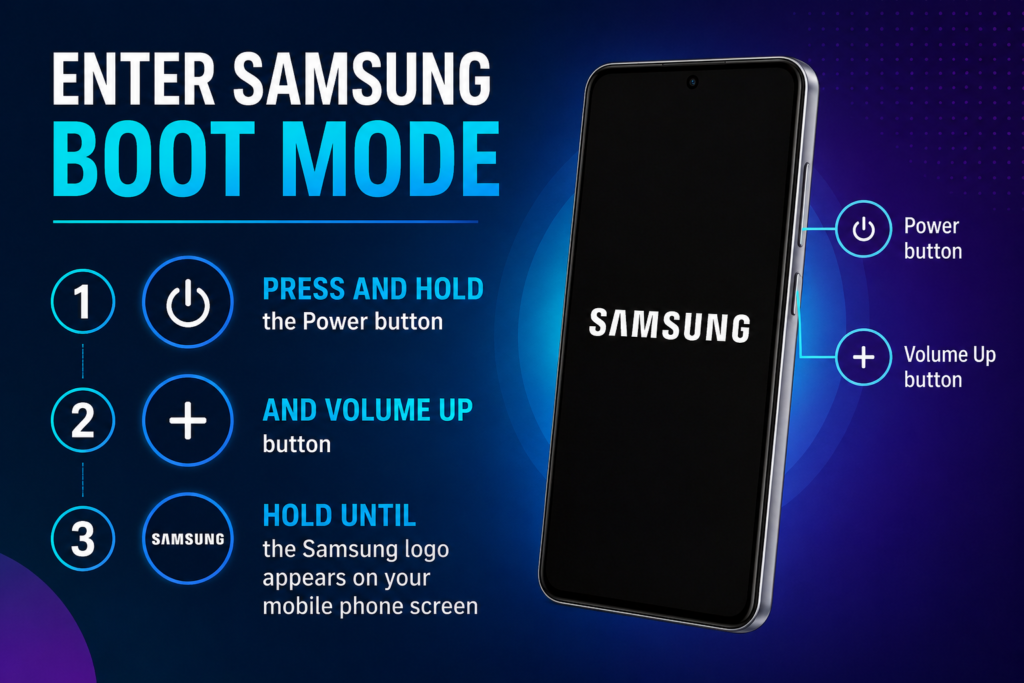
Step 3: Use the correct Recovery Mode buttons
On many recent Galaxy models without a physical Home or Bixby key, the common combination is Volume Up + Side/Power. Press and hold the buttons until the Samsung logo or Recovery screen appears, then release as directed for your model. Older devices may use a Home key or Bixby key as part of the combination.
Step 4: Confirm that the Recovery menu has opened
If the Android Recovery menu appears, use the Volume keys to move through the options and the button specified by your model to select. If you only wanted to enter the menu, choose Reboot system now to restart normally. Do not select Wipe data/factory reset unless you have backed up your files and deliberately want to erase the device.
If Recovery Mode still does not open
If the phone returns to the normal home screen or the Samsung PDP error appears again, work through these checks one at a time:
- Check the cable and USB port: Try a known-good data cable and another USB port on the computer. A charge-only cable may not provide the connection the procedure expects.
- Recheck the model-specific keys: Confirm whether your device uses the Side/Power key alone or also has a physical Home or Bixby key.
- Check the buttons: A stuck or damaged Volume or Power/Side key can interfere with the sequence. Remove the case and check that each key moves normally.
- Allow a normal restart: If the phone boots successfully, back up important data before attempting further troubleshooting.
- Seek Samsung support: If the phone cannot boot, repeatedly restarts, has physical damage, or Recovery Mode remains inaccessible, contact Samsung support or an authorised service centre.
If the problem began during a software update, Samsung’s Smart Switch emergency software recovery guide may be relevant for supported situations. Do not download firmware from unofficial sites or flash a package intended for a different model.
Will a factory reset fix the Samsung PDP error?
A factory reset is not a first-line fix for a Samsung PDP error that appears while trying to enter Recovery Mode. Resetting erases personal data and may trigger Google Factory Reset Protection, which can require the Google account previously used on the phone. Only consider a reset after understanding the consequences and securing a backup. See Samsung’s factory-reset guidance for details.
Frequently asked questions
Why does my Samsung phone show [PDP] back-up: fail?
The Samsung PDP error can appear during an unsuccessful attempt to access a device maintenance or recovery function. It does not identify one universal cause. Check the exact model’s recovery procedure, including whether a USB data connection is required.
Does the PDP message mean my Samsung phone is damaged?
Not necessarily. A Samsung PDP error message alone cannot confirm hardware damage. If the phone otherwise starts and works normally, check the model-specific recovery procedure first. Persistent boot failures or visible physical damage need professional diagnosis.
Do I need a PC to enter Samsung Recovery Mode?
Some Galaxy models and software versions require a USB connection for the recovery procedure. Samsung’s instructions commonly describe connecting the phone to a computer. Accessory compatibility can vary, so use the instructions for your exact model rather than assuming USB earphones or another phone will work.
Should I factory reset my phone to remove the PDP message?
No—not as an initial step. A factory reset erases user data and may not address the reason the message appeared. First confirm the correct Recovery Mode sequence and troubleshoot the USB connection and physical buttons.
Which buttons open Recovery Mode on Samsung Galaxy phones?
The combination depends on the model. Many newer devices use Volume Up and the Side/Power key; some older models include a physical Home or Bixby key. Refer to Samsung’s model-specific instructions before trying the sequence.
Final thoughts
The safest way to troubleshoot a Samsung PDP error is to establish exactly when it appears and follow the Recovery Mode procedure for your specific Galaxy model. A USB data connection is part of the documented recovery process for many newer devices, but the message should not be treated as proof of one particular fault. Avoid data-wiping or firmware-flashing steps unless you understand the risks and have a reliable backup. If you are troubleshooting a different Samsung setup issue, such as activating mobile service, see our Samsung and Android eSIM activation guide.
For model-specific help, use Samsung India Support or an authorised service centre. If you share your Galaxy model and Android/One UI version in the comments, readers can compare the correct button sequence for that device.