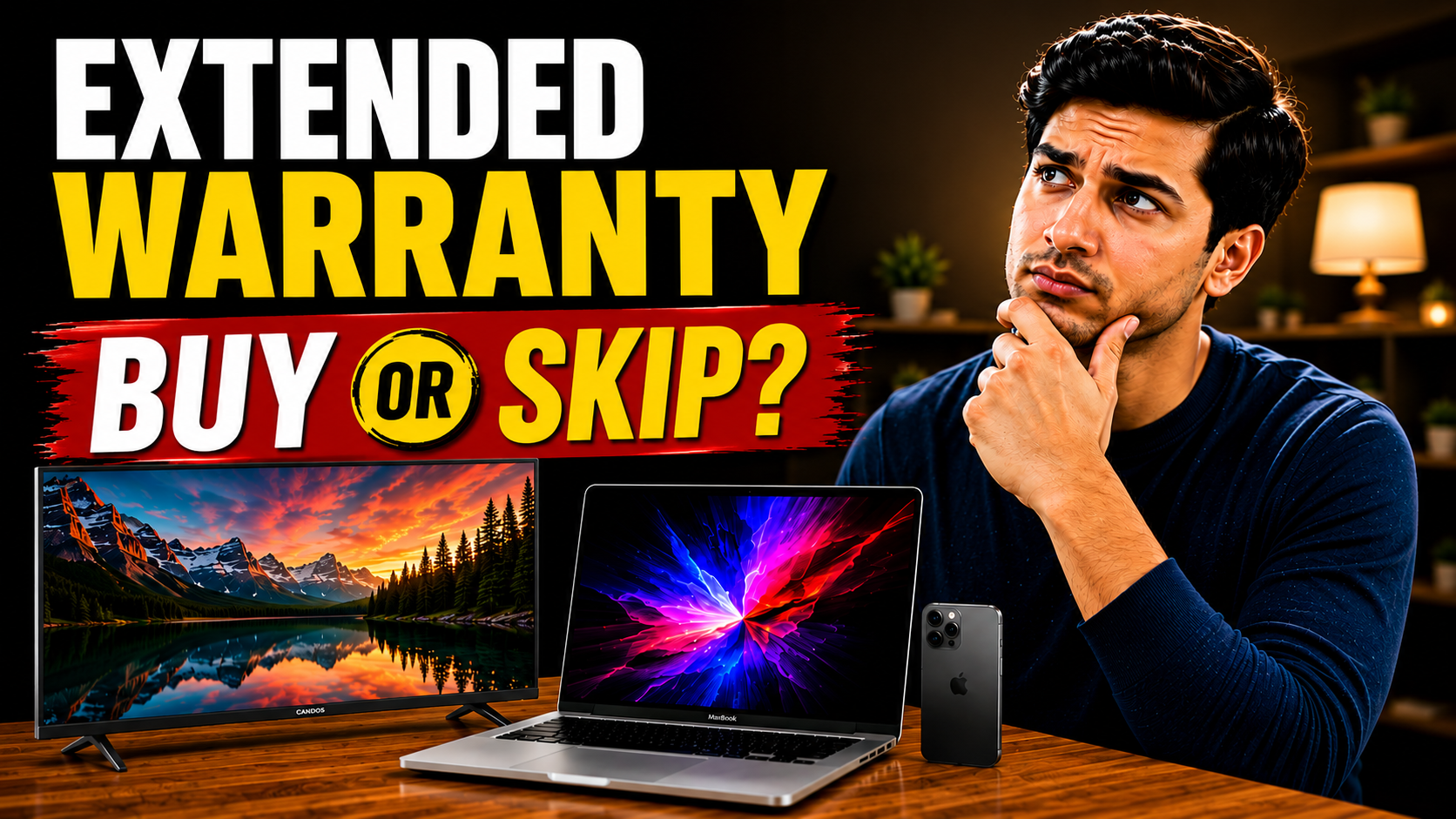
Extended Warranty: Smart Buy or Total Waste? 10 Things to Know

Quick Answer: An extended warranty can be worth it for expensive electronics, appliances, or devices with high repair costs. However, many warranties offer limited coverage, strict conditions, and overlap with manufacturer or credit card protection. The real value depends on the product reliability, repair cost, and warranty terms.
The Truth About Extended Warranties: Worth It or Waste of Money?
You buy a new laptop, TV, or smartphone.
Right before checkout, the salesperson asks:
“Would you like to add extended protection for just a little extra?”
Suddenly, doubt kicks in.
What if the device fails?
What if repairs cost thousands?
What if skipping the warranty becomes a huge mistake?
Here’s the thing…
Extended warranties are one of the most profitable products retailers sell. Yet for some devices, they genuinely save people from expensive disasters.
So which is it?
Smart protection… or cleverly packaged fear marketing?
This guide breaks down the real truth about extended warranties — without sales pressure, confusing jargon, or generic advice.
By the end, you’ll know exactly:
- When an extended warranty is worth buying
- Which products almost never need one
- The hidden loopholes most people miss
- How companies make money from warranties
- Smarter alternatives that can save you money
Table of Contents
What Is an Extended Warranty?
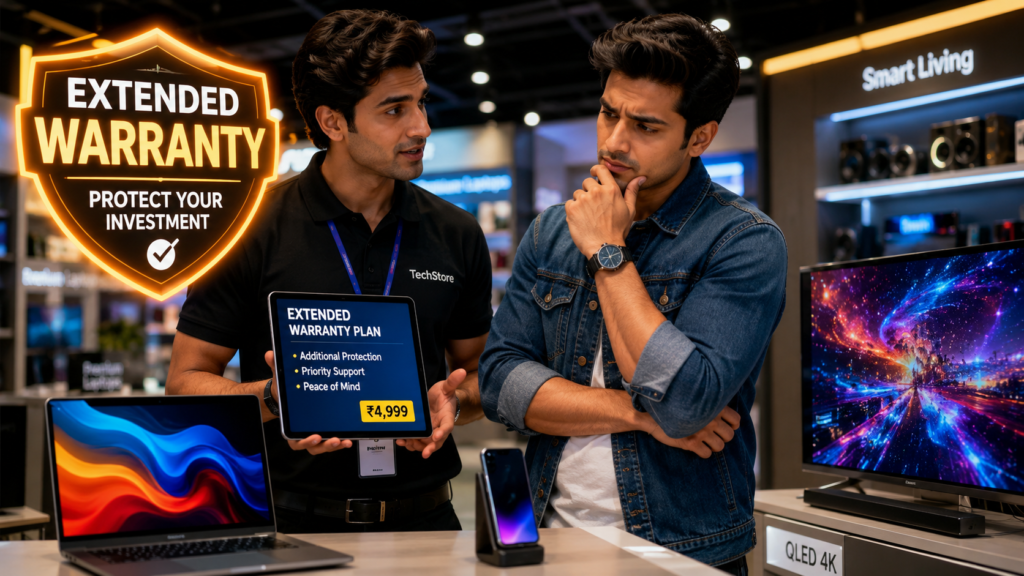
An extended warranty is an additional protection plan that extends coverage beyond the manufacturer’s original warranty.
Most electronics already come with a standard manufacturer warranty — usually ranging from 6 months to 1 year. That basic coverage typically protects you against manufacturing defects or hardware failures during the early life of the product.
An extended warranty simply increases that protection period, sometimes extending coverage by 2, 3, or even 5 additional years. These plans are commonly offered for expensive electronics like smartphones, laptops, TVs, refrigerators, washing machines, gaming consoles, and air conditioners.
At first glance, paying extra for “peace of mind” sounds like a smart decision.
But this is where many buyers misunderstand what they’re actually purchasing.
In reality, most extended warranties are not complete protection plans. Many only cover specific hardware-related issues or manufacturing defects — not every type of damage you might expect.
For example, several plans may exclude:
- accidental drops or screen damage
- water or liquid exposure
- battery degradation over time
- cosmetic scratches and dents
- damage caused by misuse or negligence
So while the word “warranty” sounds reassuring, the actual coverage can be far more limited than many customers assume.
And unfortunately, that’s usually the moment people realize the protection they paid for doesn’t fully cover the problem they’re facing.
Read Also >>> Laptop Not Powering On? 9 Quick Fixes That Actually Work (Complete Guide)
Why Stores Push Extended Warranty So Aggressively

Most people think retailers make the biggest profit from the product itself.
Often, they don’t.
Retailers and electronics chains can earn massive margins from warranty sales. In some cases, warranties are more profitable than the device being sold.
Why?
Because statistically:
- Many customers never claim them
- Some claims get rejected
- Products often survive beyond warranty periods
- Users forget coverage exists
What surprised me was how psychological the sales strategy can be.
You’re shown:
- Expensive repair fears
- Worst-case scenarios
- “Limited-time” protection offers
- Fear of future regret
This creates emotional buying decisions.
When Extended Warranties Are Actually Worth It
Now let’s be fair.
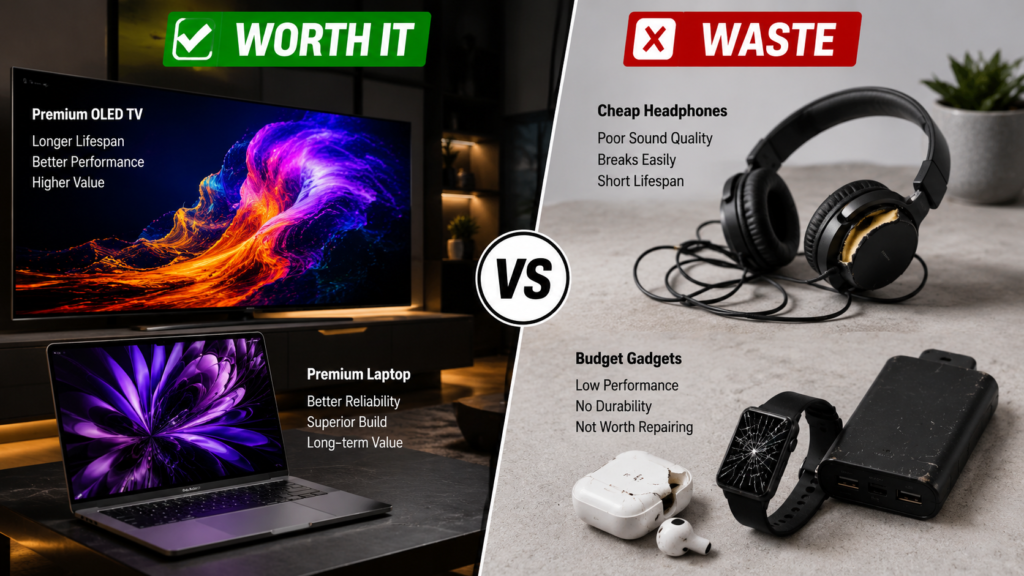
Some extended warranties absolutely make sense. If you’re buying expensive electronics like premium OLED TVs, gaming laptops, high-end refrigerators, or foldable smartphones, repair costs can easily reach hundreds — sometimes thousands — of dollars. In those cases, an extended warranty can act like financial protection against unexpected failures after the manufacturer’s coverage ends.
They also become more valuable for products with moving parts, heavy daily usage, or costly replacement components. For people who don’t want surprise repair bills or simply prefer peace of mind, paying a smaller upfront fee for long-term coverage can actually be a smart decision instead of a waste of money.
1. Expensive Appliances
Some electronics are simply too expensive to repair without feeling the financial pain. This is where extended warranties can actually make sense.
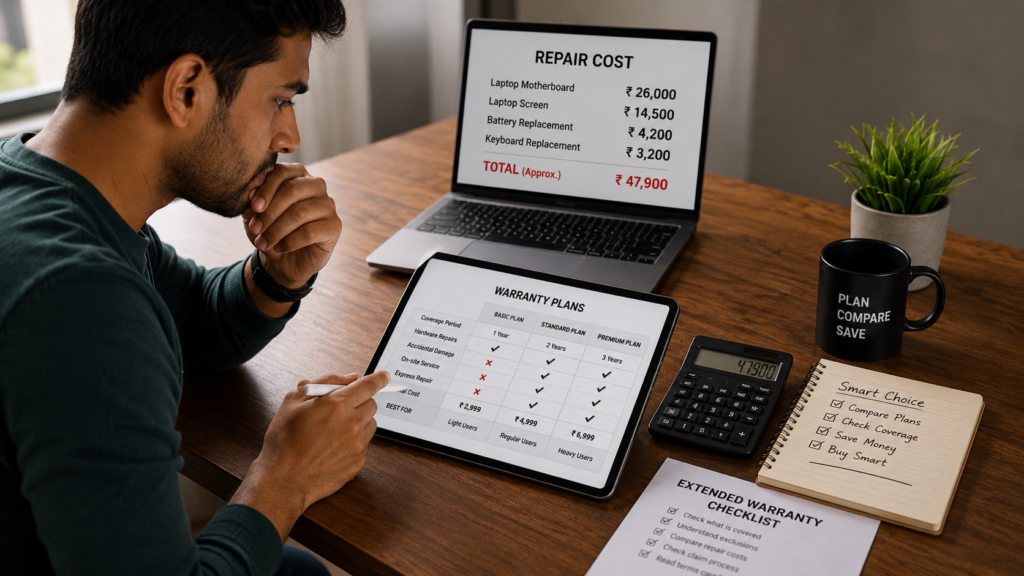
Think about products like refrigerators, OLED TVs, premium laptops, and washing machines. These are not cheap devices, and when something major fails, the repair bill can become surprisingly high. In many cases, a single component replacement can cost thousands of rupees.
For example, replacing the motherboard of a high-end OLED TV can sometimes cost almost as much as buying a new budget television. Similarly, repairing a premium laptop with a damaged display or motherboard often comes with premium repair charges because of specialized components.
An extended warranty becomes more valuable when:
- Repair costs are high
- Replacement parts are expensive
- The product has a known failure history
- You plan to use the device for many years
This is especially true for premium electronics where manufacturers use proprietary parts that are difficult and costly to replace.
If you are spending a large amount on an appliance, paying a little extra for long-term protection may offer peace of mind and reduce unexpected expenses later.
2. Products With Moving Parts
Electronics with moving or mechanical components usually experience more wear and tear over time. Unlike simple gadgets, these products constantly perform physical operations, which naturally increases the chance of failure.
Common examples include:
● Washing machines | ● Refrigerators | ● Air conditioners | ● Gaming console disc drives |
A washing machine runs through repeated spin cycles. Refrigerators operate compressors continuously throughout the day. Air conditioners depend on motors and cooling systems that work for hours during summer. Over time, these parts can weaken or fail completely.
Mechanical failures are often expensive because they involve labor-intensive repairs and replacement components.
This is where an extended warranty may become useful. Instead of dealing with sudden repair costs after the manufacturer warranty expires, you may already have coverage for common issues related to long-term usage.
For households that heavily rely on these appliances daily, warranty coverage can reduce stress and help avoid unexpected repair emergencies.
3. Devices Used Heavily Every Day
Not every electronic device is used equally. Some gadgets are essential to your everyday life, work, or education.
For example, your laptop may not just be a casual device. It could be your:
- Work machine
- College device
- Freelancing setup
- Business system
When a heavily used device suddenly stops working, the real problem is not always the repair cost. The bigger issue is downtime.
A professional working remotely may lose important work hours. A college student could miss assignments or online exams. A content creator or business owner might lose productivity and income while waiting for repairs.
In situations like these, fast service support and warranty assistance become extremely valuable.
Some extended warranty plans offer benefits like:
- Faster repair processing
- Priority customer support
- On-site servicing
- Device replacement options
For people who depend on their electronics every single day, these advantages can matter more than the actual money spent on repairs.
If your device is central to your work or studies, an extended warranty may help protect both your productivity and peace of mind.
4. Hard-to-Service Premium Electronics
Modern electronics are becoming thinner, lighter, and more advanced. While this improves design and performance, it also makes repairs far more difficult and expensive.
Many premium devices today are not built with easy repairability in mind.
This is especially true for:
- Ultra-thin laptops
- Foldable smartphones
- OLED displays
- Devices with soldered components
In older electronics, damaged parts could often be replaced individually. But many modern gadgets now use integrated designs where components are tightly packed or permanently attached.
For example, some laptops have soldered RAM and storage, meaning even a small hardware issue may require replacing the entire motherboard. Foldable phones use delicate display technology that is extremely expensive to repair. OLED screens are also known for high replacement costs compared to traditional displays.
Because of this, even minor damage can lead to massive repair bills.
Extended warranties can sometimes help reduce the financial risk associated with these advanced devices. Instead of paying the full repair cost yourself, the warranty provider may cover expensive replacement parts or servicing charges.
If you are investing in cutting-edge technology, protection coverage becomes more practical than it used to be.
In many cases, the more premium and complex the device is, the more valuable an extended warranty can become.
Important Takeaway
A warranty becomes more valuable when:
- Repair costs are high
- Product reliability is uncertain
- You heavily depend on the device
- Replacement parts are expensive
Read Also >>> How to Identify a Fake SSD: 7 Fake SSD Detection Tips to Avoid Data Loss
When Extended Warranties Are Usually a Waste of Money
Now comes the uncomfortable truth most retailers won’t tell you: many people buy an extended warranty emotionally rather than logically. Fear of expensive repairs, accidental damage, or future regret often pushes buyers into adding extra protection during checkout. Companies understand this psychology extremely well.
That’s why extended warranties are heavily promoted for electronics like laptops, TVs, smartphones, and appliances. But in reality, not every device needs additional coverage. Before paying extra, smart buyers compare the product’s reliability, repair cost, manufacturer warranty, and real-world failure rate to determine whether an extended warranty is actually worth the money.
1. Cheap Electronics
Buying a 3-year warranty for:
- Budget headphones
- Cheap keyboards
- Entry-level gadgets
often makes little financial sense.
Sometimes the warranty costs nearly half the product price.
2. Products With Strong Reliability
Some devices rarely fail within the first few years.
Examples:
- Solid-state storage devices
- Quality monitors
- Trusted premium brands
If failure probability is low, the warranty may never pay off.
3. Coverage Overlap Already Exists
Most people miss this…
Your credit card may already provide:
- Extended warranty coverage
- Purchase protection
- Accidental damage support
Some premium cards automatically extend manufacturer warranties.
You may already be protected without paying extra.
4. Warranties With Too Many Exclusions
A bad warranty often sounds amazing… until you read the fine print.
Common exclusions:
- Liquid damage
- Physical damage
- Power surges
- Unauthorized repairs
- Battery wear
- Accessories
Some plans become nearly useless in real-world situations.
Comparison Table: Worth It vs Waste of Money
| Product Type | Extended Warranty Worth It? | Why |
|---|---|---|
| OLED TV | Yes | High repair cost |
| Refrigerator | Usually Yes | Compressor repairs expensive |
| Gaming Console | Sometimes | Depends on usage |
| Budget Earphones | No | Cheap replacement |
| Mid-range Smartphone | Usually No | Phones replaced quickly |
| Premium Laptop | Often Yes | Expensive motherboard/display |
| Monitor | Rarely | Lower failure rate |
| Washing Machine | Yes | Mechanical wear |
Hidden Warranty Loopholes Most Buyers Ignore
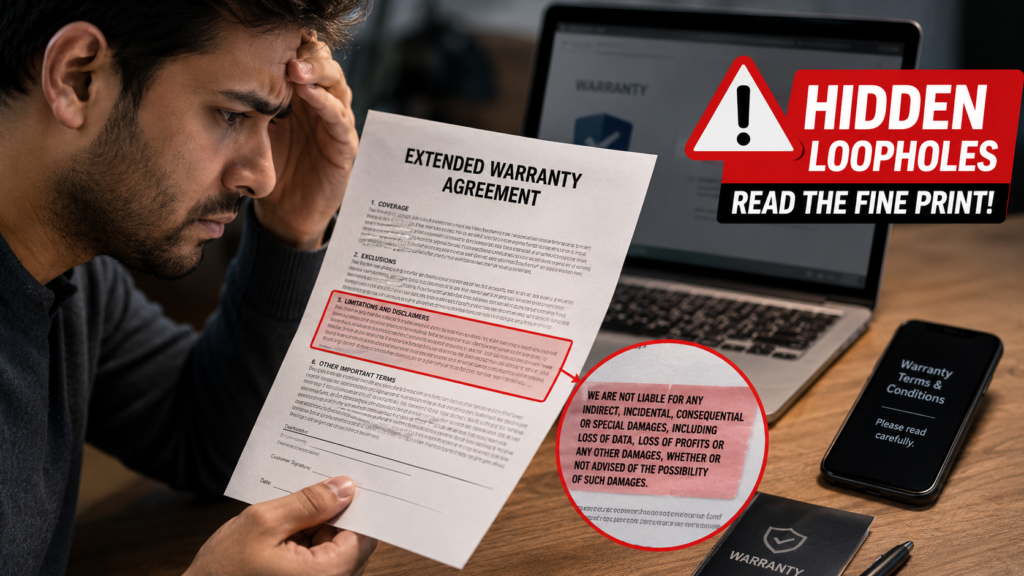
This is where many people get trapped. On the surface, extended warranties often sound like complete protection for your electronics or appliances. But once you read the fine print, hidden fees, exclusions, depreciation clauses, and strict claim conditions can significantly reduce the actual value of the coverage. Many buyers only discover these limitations when they finally try to file a warranty claim.
Deductibles Can Increase Your Repair Costs
Many extended warranties are not completely free when you make a claim. Some plans include deductibles, inspection fees, or service charges that customers only discover later. This means you could still end up paying extra even after purchasing expensive warranty coverage. Before buying an extended warranty for electronics or appliances, always check whether additional claim fees apply.
Depreciation Clauses Reduce Replacement Value
One of the biggest surprises in many extended warranty plans is depreciation. Some companies do not reimburse the full value of your product after a few years of use. Instead, you may receive:
- Partial repair coverage
- Refurbished replacement devices
- Store credit instead of a new product
This is especially common with smartphones, laptops, TVs, and consumer electronics. Understanding depreciation policies can help you decide whether an extended warranty is truly worth the money.
Minor Physical Damage Can Void Claims
Here’s what most buyers miss: tiny scratches, dents, or signs of physical damage can sometimes become reasons for warranty claim rejection. Even small cosmetic marks may allow companies to argue that the product was mishandled.
Before purchasing any protection plan, carefully review:
- Warranty exclusions
- Service terms and conditions
- Claim approval rules
- Physical damage policies
Reading the fine print now can save you from major frustration later.
Warning Section
Never buy an extended warranty without reading:
- What’s excluded
- Claim limits
- Service charges
- Replacement policy
- Repair turnaround time
Most people only check the duration.
That’s a mistake.
Extended Warranty vs Insurance
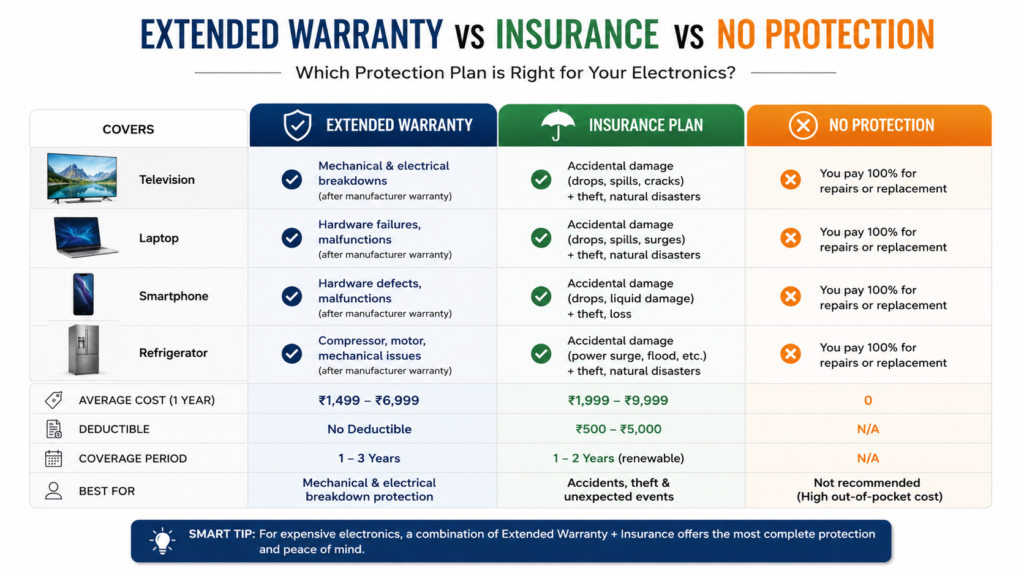
Many people confuse these two.
| Feature | Extended Warranty | Insurance |
|---|---|---|
| Covers manufacturing defects | Yes | Sometimes |
| Covers accidental damage | Usually No | Yes |
| Covers theft | No | Yes |
| Monthly premium | Usually one-time | Often recurring |
| Best for | Hardware failures | Accidents & risks |
For smartphones, insurance is often more useful than warranties because drops and liquid damage are common.
Real Repair Cost Examples
Here’s why some warranties matter.
Premium Laptop Display Repair
- Cost: Extremely expensive
- Common issue: Display damage or motherboard failure
Refrigerator Compressor Repair
- Cost: High
- Can approach major replacement expense
OLED TV Panel Failure
- Repair cost can become impractical
In these cases, warranty protection may genuinely save money.
But for smaller electronics?
Replacement is often cheaper than repair.
Beginner Mistakes People Make
Buying Warranty Out of Fear
Sales pressure works.
Most buyers don’t pause to calculate actual risk.
Ignoring Product Reliability History
Before buying a warranty:
- Search common failure issues
- Read long-term user reviews
- Check repair costs
This one step changes everything.
Not Checking Existing Protection
You might already have:
- Credit card coverage
- Manufacturer extension
- Brand service plan
- Retail return protection
Also Read >>> How to use Chrome plugin on Android with ease ?
Pro Tip
Before buying any extended warranty, ask yourself:
“If this product fails after 2 years, would repair cost seriously hurt me financially?”
If the answer is no, skip the warranty.
Best Alternatives to Extended Warranties
Sometimes there are smarter options.
1. Emergency Repair Fund
Instead of repeatedly buying warranties:
- Save that money separately
Over time, you may build your own repair fund.
2. Buy Reliable Brands
Reliability matters more than warranty length.
A well-built product often beats:
- Cheap product
- Long warranty
- Poor service quality
3. Use Credit Card Protection
Many people never explore these benefits.
Check:
- Purchase protection
- Extended warranty benefits
- Device protection
4. Local Repair Ecosystem
For some products, affordable local repair shops make warranties less valuable.
Especially in India, repair markets can be highly cost-effective.
Myths vs Reality
| Myth | Reality |
|---|---|
| All repairs are free | Many exclusions apply |
| Extended warranty means full insurance | Not true |
| More years always better | Coverage quality matters more |
| Expensive warranty = better protection | Sometimes mostly marketing |
| Every device needs protection | Many products rarely fail |
People Also Ask
Are extended warranties a scam?
Not always. Some provide genuine value for expensive products with high repair costs. However, many are overpriced or have restrictive conditions.
Is extended warranty worth it for laptops?
It can be worth it for premium laptops with expensive displays or motherboards, especially if used daily for work or studies.
Should I buy an extended warranty for a TV?
For expensive OLED or premium TVs, it may be worthwhile because panel repairs can be costly.
Do credit cards offer extended warranties?
Yes, some credit cards automatically extend manufacturer warranties or offer purchase protection benefits.
Is phone insurance better than extended warranty?
Usually yes. Phone insurance often covers accidental damage, which is more common than hardware defects.
Why do stores push warranties so much?
Because warranties can generate significant profit margins for retailers.
What products should never need extended warranties?
Cheap accessories, low-cost gadgets, and products with low repair costs generally don’t justify extended coverage.
How do I know if a warranty is good?
Check:
- Exclusions
- Claim approval process
- Deductibles
- Service center quality
- Replacement policy
Final Verdict: Whether Extended Warranty Worth It or Waste of Money?
Here’s the honest answer:
Extended warranties are neither always smart nor always useless.
They make sense when:
- Repair costs are very high
- The product is difficult to replace
- You depend heavily on the device
- Reliability concerns exist
But for many everyday gadgets, extended warranties are mainly emotional purchases driven by fear.
Most people miss this:
The best protection often comes from:
- Buying reliable products
- Understanding actual risks
- Reading warranty terms carefully
- Using existing financial protections wisely
The next time someone asks:
“Would you like extended protection?”
You’ll know how to decide logically — not emotionally.